
The Lean Founder’s Operational Playbook
There is a specific kind of exhaustion that hits lean startup teams around month four. The product works. Customers are coming in. But the operational weight, support tickets, content backlogs, hiring pipelines, financial tracking, and everything in between, starts crushing the same three people who are also supposed to be building the thing.
Growth exposes gaps. And in a small team, every gap falls on someone’s lap.
The conventional answer used to be: hire your way out of it. Bring in a head of ops, a content manager, a customer success rep, a data analyst. But early-stage startups rarely have the runway for that, and even when they do, hiring is slow, onboarding is slower, and the wrong hire at the wrong stage can set a company back months.
Headcount is expensive, fragile, and hard to reverse.
What the sharpest lean teams are doing instead is building AI into their operating layer before they scale headcount. Not as a gimmick, not as a way to seem modern to investors, but as a genuine operational strategy.
They are using AI to handle the repeatable, the structured, and the time-consuming, so their humans can stay focused on the irreplaceable: judgment, relationships, product instincts, and decisions that require real context.
This playbook is for founders, CTOs, and early-stage operators who want to run leaner without running ragged. Every section covers a real function that AI can absorb or dramatically accelerate, with enough specificity to be useful on Monday morning rather than just interesting on a Sunday read.
Solution Overview
The core idea here is function-level AI integration, not tool hoarding. Most startups that fail at AI adoption do so because they buy fifteen tools and use none of them consistently. The teams that succeed treat AI the way a good engineering team treats infrastructure: they identify the highest-friction workflows, instrument them with AI, and build repeatable systems around those wins.
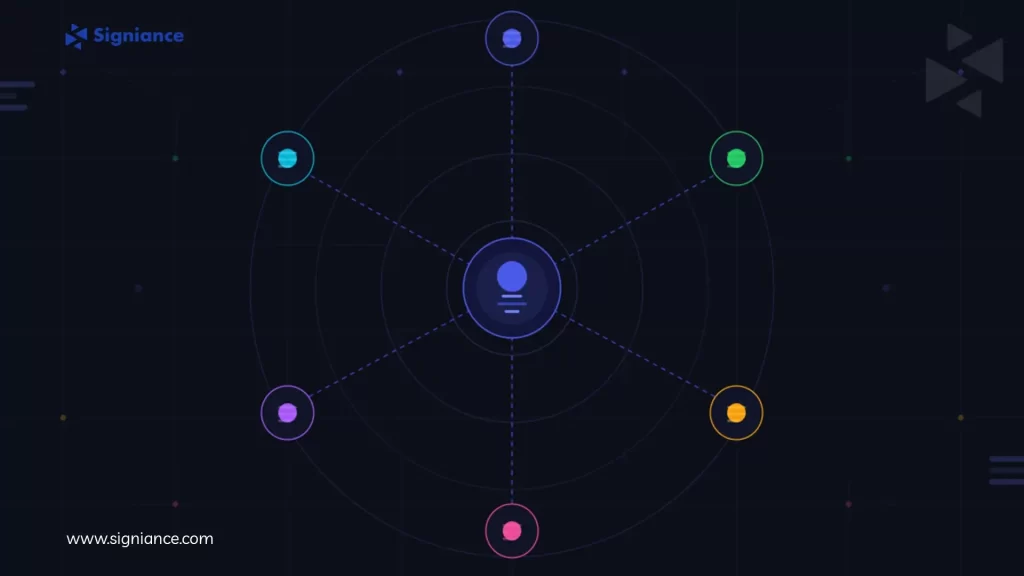
The functions covered in this playbook are customer support, content and marketing, hiring and recruiting, finance and reporting, product and engineering, and internal knowledge management.
These are not hypothetical use cases. They are the operational bottlenecks that consume most of a small team’s non-building time, and they are all genuinely addressable with the AI tools available right now.
Customer Support Without a Support Team
Customer support is usually the first place a small team feels the squeeze. Every user email, every onboarding question, every bug report that turns into a twenty-minute conversation, these interactions are individually small but collectively enormous. A founder spending two hours a day in support is a founder not building product.
The right AI system for support is not just a chatbot bolted onto your contact page. It is a tiered response architecture. Start by feeding your existing documentation, FAQs, past support threads, and product knowledge into a retrieval-augmented system. Build an AI agent that can handle Tier 1 queries autonomously, the password resets, the billing questions, the how-do-I-find-this-feature requests.
Then create a clear escalation path where anything requiring judgment, complaint resolution, or account-level decisions gets routed to a human with the AI-generated context summary already attached.
Teams that implement this properly are not just saving time on responses. They are generating something more valuable: a structured, searchable record of every user pain point, question pattern, and friction moment in their product.
Run that data through a summarisation pipeline weekly and you have a free product roadmap, built directly from user behavior.
The tools to do this exist at multiple price points. What matters more than the tool is the structure: define what AI handles, what humans handle, and what the handoff looks like.
Without that, you end up with neither a good support experience nor a functional AI system.
Marketing and Content at Scale Without a Content Team
Content is the other major time sink. Blog posts, social content, email sequences, case studies, ad copy, SEO pages. A startup without a dedicated content function either neglects it entirely or burns an engineer or founder on it. Neither is a good use of your constraints.
AI does not replace the editorial judgment that makes content good. What it does is eliminate the draft-zero problem. Getting from a blank page to a structured first draft is where most of the time goes.
With a well-constructed prompt system and a clear content brief template, you can use AI to produce structured drafts, repurpose long-form content into shorter formats, generate keyword clusters, and build out email sequences from a single source piece.
The lean content engine that works for most early-stage startups looks like this: one person sets the content strategy, approves topics, and does final editing. AI handles drafting, reformatting, and distribution variants.
The human’s time goes from ten hours per piece to two. Output increases. Quality, when the brief is strong, actually improves because drafts are more structured and complete.
One thing worth emphasising is that content quality is still entirely dependent on input quality. Vague prompts produce vague content. The teams that get the most out of AI-assisted content are the ones who invest time in building strong prompt templates and editorial guidelines upfront, and then treat AI as a very fast junior writer who needs precise direction.
Hiring and Recruiting on a Lean Budget
Recruiting is brutally time-intensive. Writing job descriptions, screening applications, scheduling interviews, following up with candidates, managing the pipeline through multiple rounds. In a small team, this work typically falls on the founder or a senior engineer who should be doing something else entirely.
AI can take a significant portion of this load. Job description generation from a role spec is an obvious starting point, but the more valuable application is structured screening. Using AI to generate a role-specific screening questionnaire, then running initial application responses through a scoring rubric, can compress the top-of-funnel review from eight hours to forty-five minutes. You still make every hiring decision as a human. The AI is doing the sorting, not the judging.
Scheduling is another area where the time cost is disproportionate to the value created. AI-powered scheduling tools that can negotiate calendar availability, send reminders, handle rescheduling, and manage the logistics of multi-round interviews free up real hours every week.
Combine this with AI-generated interview question banks tailored to the role and seniority level, and a team of two can run a hiring process that previously needed a dedicated recruiter.
Financial Visibility Without a Finance Team
Most early-stage startups run on vibes and spreadsheets until they can afford a finance person. The problem with vibes is that cash surprises are almost always bad surprises. The problem with spreadsheets is that nobody is updating them consistently when the team is small and busy.
AI tools connected to your accounting, banking, and payment infrastructure can generate weekly financial summaries, flag anomalies, produce cash flow projections, and surface unit economics automatically. You are not replacing a CFO. You are replacing the absence of financial visibility that kills companies quietly.
The practical implementation here is straightforward: connect your financial data sources to a reporting pipeline, build a prompt-driven summary system that runs on a schedule, and set up alert thresholds for metrics like burn rate, MRR movement, and receivables aging. Review it weekly as a team ritual. The goal is to move from reactive financial awareness to something closer to real-time visibility, without needing a dedicated finance function to maintain it.
Engineering and Product Velocity with AI in the Loop
For technical founders, AI’s impact on engineering velocity is already well-documented. Code generation, test writing, PR review assistance, documentation generation, these capabilities are compressing individual engineering output in ways that directly change what a small team can ship.
But the less-discussed application is on the product side. AI can dramatically accelerate the research and synthesis work that informs product decisions: summarising user interviews, clustering feature requests by theme, generating user story drafts from discovery notes, writing product specification documents from rough briefs.
This work used to require either a dedicated product manager or a founder stretched across too many responsibilities.
The honest caveat here is that AI in engineering is most powerful when the team already has strong engineering practices. Code generation tools produce bad code faster if there are no standards, no review processes, and no architecture discipline.
The AI amplifies what is already there. If the foundation is solid, velocity goes up significantly. If the foundation is shaky, the problems compound faster.
Internal Knowledge and Institutional Memory
As a startup grows, knowledge starts living in people’s heads, Slack threads, and scattered documents that nobody can find. This is manageable at three people and becomes a serious liability at fifteen. Small teams underestimate how much time is lost to the question of where’s the doc for that, or who was the person who figured this out.
Building an internal knowledge base that is connected to an AI query layer is one of the highest-leverage infrastructure investments a lean team can make. It is also one of the most neglected because it does not feel urgent until it is very urgent. The teams that build this early create a compounding advantage: every decision, process, and piece of institutional knowledge that gets documented becomes queryable. Onboarding new people gets faster. Repeated questions get routed to the knowledge base instead of interrupting senior team members.
The technical overhead to build this is genuinely low with current tooling. The cultural discipline is harder. Someone has to own documentation as a practice, not just as a cleanup task that happens before fundraising.
—
Conclusion
Running a startup with a small team has always been about leverage. The founders who build enduring companies are not the ones who work the most hours. They are the ones who structure their time and their systems so that the highest-value human judgment gets applied to the highest-leverage decisions. AI does not change that fundamental equation. It changes what is available to put under that equation.
The playbook described here is not a one-time implementation project. It is an ongoing practice of identifying where human time is going, asking whether AI can absorb or accelerate that work, and building systems rather than leaving decisions to individual effort. The teams that do this consistently find themselves with more capacity, more operational clarity, and a better foundation for scaling when the time comes.
At Signiance, we work with early-stage and growth-stage startups who are navigating exactly this. We know what it looks like when technical infrastructure and operational systems are built in alignment with each other, and we know what it costs when they are not. If your team is thinking through how to use AI to run a startup with a small team more effectively, we are the kind of partner who will give you a straight answer about what is worth building and what is not.
If you are building with a lean team and want to think through your operational architecture with people who have seen what works and what breaks, book a free 1:1 call with the Signiance team.
No sales process, no pitch deck, just a real conversation about where AI can give your team the most leverage right now. Book your free call with Signiance