
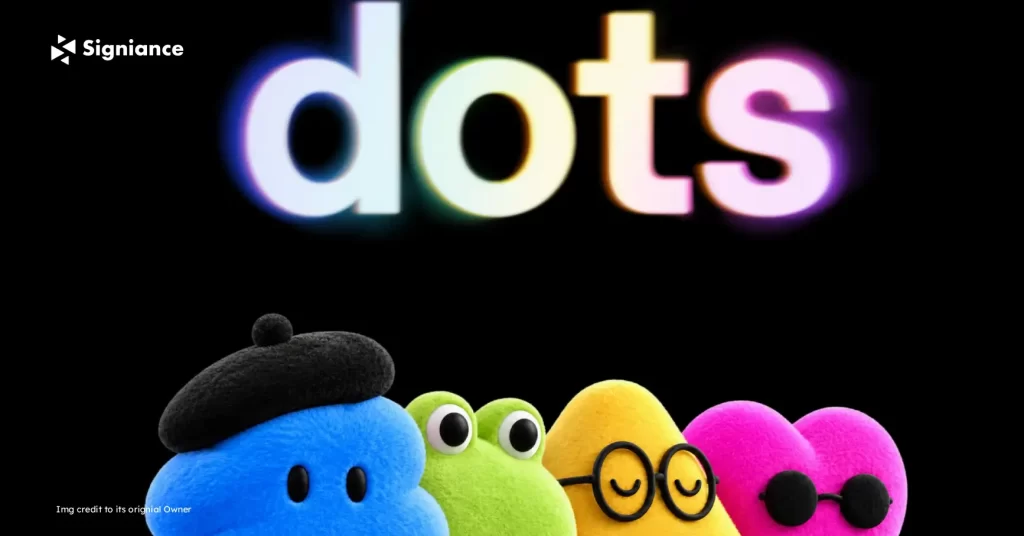
OpenAI Dots introduce a different way of working with AI, where agents can maintain context, stay connected to your work, and continue making progress beyond a single conversation.
For most of the generative AI era, working with AI has followed a simple pattern: you ask, AI responds, and the interaction stops until you return with another request. OpenAI Dots introduce a different approach. Instead of treating AI as something you repeatedly prompt, Dots are designed as always-on agents that can maintain context, work with connected applications, conduct research, and continue working toward an ongoing goal.
Over the last few years, most improvements in artificial intelligence have focused on making models more capable. Models have become better at reasoning, coding, research, image understanding, content generation, and working across different types of information.
But there has always been another limitation that has received less attention.
Most AI systems still wait for you to tell them what to do.
Think about how we normally interact with AI. You open ChatGPT, explain your situation, provide some context, ask a question, receive an answer, and then leave. When another task appears, you return and start another conversation.
Even when AI remembers some information about you or has access to connected applications, the interaction has traditionally remained centered around the prompt. You ask. AI responds.
Agentic AI started changing this model. Instead of simply generating an answer, AI agents could use tools, browse information, execute multiple steps, work with software, and complete more complicated tasks.
OpenAI Dots take that idea in another direction. Rather than thinking only about an AI that can complete a task, Dots introduce the idea of an AI agent that can stay responsible for an ongoing goal. OpenAI describes Dots as always-on agents that can continue making progress between conversations, maintain context, work with connected applications, and operate through their own cloud computing environment.
That creates an important shift in how we might think about AI. The question is no longer simply, “What can AI do when I ask?” It increasingly becomes, “What work can I responsibly delegate to AI over time?”
The Scenario Before OpenAI Dots
Imagine you are managing marketing for a growing technology company. Every week, there are dozens of things you need to understand. You might want to know whether competitors launched something new, whether an important keyword dropped in ranking, how campaigns are performing, what customers are talking about, which leads need attention, what meetings are coming up, and whether any project is falling behind schedule.
AI can already help with almost every one of these activities. You can ask an AI model to research competitors. You can upload analytics data and ask it to identify trends. You can provide campaign reports and ask for recommendations. You can summarize customer feedback or prepare talking points for an upcoming meeting.
The problem is that you are often still coordinating the entire process. You decide when the research needs to happen. You collect the information. You explain what happened previously. You provide the necessary context. You ask for analysis. Then you decide what the next prompt should be.
In other words, AI might be doing some of the work, but you are still managing the AI workflow.
Early AI agents improved this considerably because they could work through multiple steps and use external tools. Instead of answering a single question, an agent could research something, analyze information, use software, and return with a completed result.
But many agentic workflows still behave like sophisticated tasks. Something triggers the agent, the agent performs the task, produces an output, and then stops.
OpenAI Dots are interesting because the concept moves closer to continuous responsibility. Instead of thinking about a single task, you can think about an ongoing goal that requires context, observation, research, and repeated action over time. That is a much bigger change than simply making the underlying model smarter.
What’s Fresh This Time?
The interesting thing about OpenAI Dots is not simply that AI can perform actions. We already have AI systems capable of browsing the web, analyzing documents, writing code, working with applications, researching topics, and completing multi-step tasks.
What changes with Dots is how several capabilities come together. A Dot can maintain context around an ongoing objective. It can work with applications that the user chooses to connect. It has its own cloud computer. It can conduct proactive research within permitted sources. Most importantly, it can continue working between conversations instead of requiring the user to manually restart the process every time.
This starts moving AI away from being purely a tool and closer to becoming a persistent participant in a workflow.
Consider the difference between asking an AI, “Analyze our competitors and tell me what changed this week,” and giving an agent an ongoing responsibility such as, “Keep track of these competitors and surface meaningful changes that could affect our positioning.”
The first is a task. The second is a responsibility. That distinction is where Dots become particularly interesting.
What OpenAI Dots Actually Bring to the Table
One of the biggest changes is the move from session-based AI to responsibility-based AI. Most AI interactions have traditionally existed inside sessions. You enter a conversation with a goal, provide instructions, receive an answer, and the session eventually ends.
But real work rarely works like that. Projects continue for weeks or months. Competitors continue changing. Customers continue providing feedback. Marketing campaigns continue producing data. Products continue evolving. Meetings continue happening. The context around work is constantly moving.
An always-on agent can potentially remain connected to that context instead of treating every interaction as an isolated request. For example, imagine assigning an agent responsibility for helping with a product launch. During the first week, it might organize research and understand the competitive environment. Later, it might help track changes, prepare information for meetings, analyze new documents, or identify something that requires your attention.
You are no longer repeatedly asking an AI to understand the same project. The AI already understands the project because it has remained involved.
The Cloud Computer Makes the Agent More Than a Chat Window
Another important part of Dots is the dedicated cloud computer. This might sound like a technical implementation detail, but it has important implications.
Traditional chatbots primarily exist inside the conversation interface. You give them information and they generate information back. Real work, however, happens across systems. Documents live in one application. Meetings exist in another. Customer conversations happen somewhere else. Research happens on the web. Project information might live inside another platform entirely.
For an AI agent to become genuinely useful for ongoing work, it needs an environment where it can operate beyond generating text inside a conversation. A dedicated computing environment creates the foundation for that.
It allows us to imagine a different relationship with AI. Instead of an AI simply saying, “Here is what you should do next,” the interaction can move closer to, “Here is what I worked on, here is what changed, and here is what requires your decision.” That is much closer to delegation than prompting.
Connected Apps Give the Agent Real Context
The quality of an AI system depends heavily on the context available to it. An AI model might be extremely intelligent, but if it does not understand your projects, documents, conversations, priorities, or workflows, its usefulness will always have limits.
Connected applications help solve part of this problem. When an AI agent can work with permitted information from the tools where work already happens, it becomes much more contextually useful.
Imagine asking a generic AI assistant, “What should I focus on today?” Without context, the answer will probably be generic. Now imagine an agent that understands your ongoing projects, knows what changed recently, can access the applications you have explicitly connected, understands previous conversations, and knows what responsibilities you have assigned to it.
The same question suddenly becomes much more meaningful. This is why the future of useful AI is not simply about having the most powerful model. It is increasingly about the combination of intelligence, context, tools, permissions, and persistence.
Proactive Research Changes the Prompting Relationship
Perhaps one of the most interesting parts of Dots is proactive research. Traditional AI depends heavily on humans recognizing when something needs to be investigated. You notice something. Then you ask AI about it.
But what happens when the AI can continuously research permitted information related to an ongoing responsibility? Imagine that you are tracking a rapidly changing technology market. Normally, you might open ChatGPT every few days and ask, “What changed?”
With a persistent agent, the relationship could work differently. The agent can research relevant permitted sources, maintain its own working context, and bring meaningful information to your attention. The human no longer needs to initiate every research cycle.
That sounds like a subtle difference, but at scale it could eliminate a significant amount of repetitive work. People spend enormous amounts of time checking dashboards, reading updates, comparing documents, scanning emails, reviewing reports, and trying to understand whether something important has changed.
If an AI agent can handle part of that observation layer, humans can spend more time deciding what those changes actually mean.
Memory Makes AI More Useful Over Time
Anyone who uses AI heavily knows how frustrating repeated context can become. You explain the company. Then you explain the target audience. Then the product. Then your priorities. Then how you want something formatted. Then what the AI should avoid. Then you return a few days later and repeat parts of the process.
Persistent context changes that experience. If an AI agent remains involved in an ongoing responsibility, the conversation can gradually move away from explaining the background and toward improving the actual work.
Think about working with a colleague. You do not introduce your company, explain your role, describe the product, and explain every ongoing project every morning. There is shared context. That shared context is one of the reasons human teams can work efficiently.
Persistent AI agents attempt to bring some version of that continuity into human-AI collaboration. The more relevant context the agent can responsibly maintain, the less time users need to spend rebuilding the same foundation.
But More Autonomy Also Means More Responsibility
There is another side to persistent AI agents that should not be ignored. If AI can work independently for longer periods, mistakes become more consequential.
An incorrect paragraph generated inside a chatbot is relatively easy to identify and fix. An incorrect action taken across a business workflow can be much more serious. This is why permissions, boundaries, approval systems, and human oversight become increasingly important as AI becomes more autonomous.
The goal should not simply be to give AI as much control as possible. The better model is controlled delegation. AI can handle repetitive execution and research. Humans define objectives, establish boundaries, review important outcomes, and remain responsible for decisions that require judgment.
Consider something as simple as email. There is a major difference between allowing an AI agent to research a topic and draft a response versus allowing it to send messages externally without review.
The same principle applies across finance, customer communication, software, marketing, operations, and other business functions. As AI agents become more capable, organizations will need to think carefully about not only what an AI can do, but also what it should be allowed to do independently.
The Bigger Opportunity Is Not One Massive Task
The most interesting use cases for Dots may not be spectacular demonstrations where AI completes an enormous project by itself. The real opportunity could be much simpler.
Think about how many small repetitive loops exist inside a normal working week: checking whether something changed, preparing for a meeting, researching competitors, reviewing project progress, reading updates, analyzing customer feedback, comparing reports, finding missing information, preparing summaries, and identifying things that require attention.
None of these activities individually looks revolutionary. Together, however, they consume enormous amounts of time. Persistent AI agents could potentially remove many of these small coordination loops.
And that may ultimately create more value than trying to completely automate an entire job.
Result: From AI Assistant to AI Collaborator
OpenAI Dots represent part of a broader evolution in how we interact with artificial intelligence.
The first major phase of generative AI was about generation. We asked AI to write articles, summarize documents, generate images, explain concepts, or create code.
Then came stronger reasoning and tool use. AI could research information, analyze larger datasets, work with files, use applications, and complete more complicated sequences of actions.
Persistent agents introduce another layer: continuity. Instead of AI simply completing whatever task appears in the prompt box, we are moving toward systems that can remain involved with a goal.
That changes the role of humans as well. Our job becomes less about constantly telling AI every individual action it should perform and more about defining the objective, providing appropriate context, setting permissions, reviewing results, and intervening when judgment is required.
In other words, the AI handles more of the execution loop while the human remains responsible for direction.
Conclusion
What makes OpenAI Dots interesting is not simply another improvement in model intelligence. It is the change in the relationship between humans and AI.
For years, AI has largely been reactive. We ask something, and the model responds. Agentic systems started allowing AI to perform actions. Persistent agents take the next step by allowing AI to remain involved.
That distinction matters. We started with AI that could answer. Then we moved toward AI that could reason. Then came AI that could use tools and take actions. Now we are moving toward AI that can maintain context and stay responsible for ongoing work.
There are still major questions around reliability, permissions, privacy, security, human oversight, and how much autonomy organizations should actually give these systems. Those questions will become even more important as agents become more capable.
But the direction is becoming clearer. The future of AI at work may not be about writing increasingly complicated prompts or opening a chatbot every time we need help.
It may be about deciding which responsibilities should remain completely human, which repetitive workflows AI can manage, and where humans and persistent AI agents can work together.
And that is what makes OpenAI Dots more interesting than another AI feature release. It changes the conversation from “What should I ask AI?” to “What can I responsibly delegate to AI?”
Reference Notes
Technical descriptions in this article are based on OpenAI documentation and release information available at the time of writing. Product capabilities may evolve over time.